
CMS Audit Preparation Webinars for Health Plans | HealthSpective

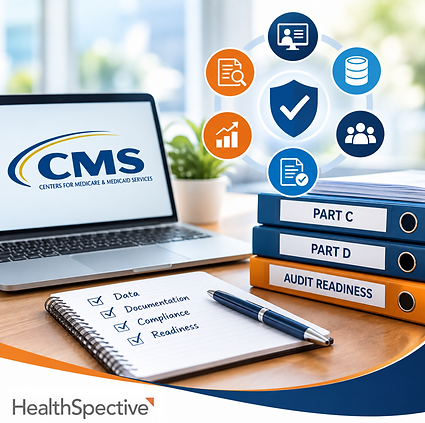
Preparing for CMS Audits: How Health Plans Can Build Audit Readiness Through Expert Training and Best Practices
For Medicare Advantage organizations and Part D sponsors, CMS audit readiness should be an ongoing process—not an activity that begins when an audit engagement letter arrives.
CMS maintains program audit protocols and resources for Medicare Advantage and Part D sponsors, including information on the program audit process, audit protocols, enforcement reports, and audit submission requirements.
When an organization is selected for an audit, teams may need to quickly coordinate data, documentation, subject matter experts, compliance staff, delegated entities, and operational leaders. Understanding what CMS expects before an audit occurs can help organizations establish more consistent processes and identify potential issues earlier.
That is where specialized CMS audit preparation training can make a difference.
HealthSpective provides educational webinars and consulting support designed to help health plans understand CMS audit expectations, strengthen audit readiness, and implement practical best practices across their quality, compliance, data, and operational programs.
What Is CMS Audit Readiness?
CMS audit readiness is the ongoing ability of a health plan to demonstrate that its processes, data, documentation, and operations meet applicable Medicare requirements.
For Part C and Part D organizations, CMS program audits may involve multiple program areas and require organizations to provide specific data and supporting documentation. CMS's current program audit resources include audit protocols, submission checklists, and process guidance.
Audit readiness can include:
Maintaining accurate and complete data
Understanding CMS audit protocols and data requests
Validating universe data before submission
Maintaining supporting documentation
Monitoring compliance throughout the year
Identifying and addressing potential deficiencies
Coordinating internal stakeholders and delegated entities
Establishing clear audit-response workflows
Tracking corrective actions and remediation
Maintaining documentation that demonstrates compliance
CMS's audit process guidance specifically addresses universe integrity testing, including verification that submitted data is accurate and can be supported through organizational systems and documentation.
Why CMS Audit Preparation Training Matters
CMS requirements, reporting specifications, audit protocols, and technical expectations can change over time. CMS currently publishes Part C and Part D reporting requirements and technical specifications for each applicable reporting year.
For health plans, keeping teams informed is an important component of an effective compliance and audit-readiness program.
However, audit preparation is not simply about understanding regulations.
Teams also need to understand how requirements translate into day-to-day processes, data collection, documentation, testing, and audit response activities.
HealthSpective webinars are designed to bridge that gap by translating complex audit concepts into practical information that quality, compliance, operations, data, and leadership teams can apply within their organizations.
HealthSpective CMS Audit Preparation Webinars
HealthSpective provides educational webinars focused on helping health plans understand the CMS audit environment and prepare their teams for the operational demands of an audit.
Our webinars can be structured around the organization's needs and may address topics such as:
Understanding the CMS Audit Process
Help teams understand the general stages of a CMS program audit, key terminology, expectations, and responsibilities.
CMS publishes a Program Audit Process Overview and current Part C and Part D Program Audit Protocols to provide sponsors with information about the audit process and testing requirements.
CMS Audit Protocols and Data Requests
Training can help teams understand how to navigate applicable protocols and data requests, identify responsible stakeholders, and prepare information in accordance with CMS specifications.
Universe Data Preparation and Validation
Accurate universe data is a critical component of CMS audit readiness.
CMS guidance describes universe integrity testing in which submitted data may be compared against the sponsoring organization's systems and supporting documentation.
HealthSpective can help organizations establish processes for reviewing, validating, reconciling, and documenting universe data before submission.
Documentation and Evidence Readiness
Audit readiness extends beyond having the right data.
Organizations should be able to identify the documentation supporting their processes, transactions, decisions, and compliance activities.
Training can help teams develop a consistent approach to:
Documentation retention
Evidence organization
Source-system validation
Supporting documentation review
Audit response preparation
Internal quality checks
Identifying Potential Compliance Issues
Effective audit preparation includes identifying potential issues before they become audit findings.
Health plans can use internal monitoring, quality reviews, data validation, and compliance testing to identify opportunities for remediation.
Delegated Entity Audit Readiness
Health plans often depend on delegated entities and vendors for operational activities and data.
Audit preparation should therefore extend beyond internal teams.
HealthSpective webinars can help organizations consider how delegated entity oversight, data submissions, documentation, and communication fit into the overall audit-readiness strategy.
Corrective Action and Remediation Best Practices
When an issue is identified, organizations need a structured approach for understanding the root cause, implementing corrective action, monitoring results, and documenting remediation.
CMS publishes compliance actions, including notices of non-compliance, warning letters, and corrective action plan requests.
Training can help teams understand the importance of establishing a repeatable corrective-action process rather than addressing each issue in isolation.
CMS Audit Best Practices for Health Plans
While every organization's audit environment is different, several foundational practices can strengthen audit readiness.
Make Audit Readiness an Ongoing Process
Waiting until an audit is announced can create unnecessary pressure.
Instead, organizations can incorporate audit-readiness activities into their existing quality and compliance programs.
Validate Data Before CMS Requests It
Data should be reviewed for completeness, accuracy, consistency, and alignment with source systems.
This is particularly important when organizations rely on multiple systems, vendors, or delegated entities.
Maintain Clear Documentation
Teams should be able to identify the documentation supporting reported information and demonstrate how processes are performed.
Establish Clear Ownership
Audit preparation can involve compliance, quality, operations, clinical teams, IT, analytics, pharmacy, vendors, and leadership.
Clearly defining responsibilities can make the response process more organized.
Test Your Processes
Internal mock audits, data validation activities, documentation reviews, and targeted testing can help organizations identify gaps before an external review.
Monitor CMS Updates
CMS publishes updates to audit protocols, reporting requirements, technical specifications, and other Medicare program resources.
Organizations should incorporate applicable updates into their compliance and audit-readiness processes.
Why HealthSpective?
HealthSpective combines healthcare quality, compliance, data validation, and audit expertise to help organizations approach CMS requirements with a practical, data-driven perspective.
Our team can provide educational webinars that help health plan teams better understand:
CMS audit expectations
Audit preparation strategies
Data and universe validation
Documentation requirements
Compliance monitoring
Audit response processes
Corrective action and remediation
Delegated entity oversight
Data integrity and reporting
Our goal is to help organizations move beyond reactive audit response toward a more proactive approach to quality, compliance, and data validation.
Turn CMS Audit Preparation Into an Ongoing Strategy
CMS audit readiness is not simply about preparing for an audit—it is about building processes that support accurate data, reliable documentation, effective compliance monitoring, and continuous improvement.
HealthSpective's CMS audit preparation webinars provide health plan teams with practical education and best practices they can incorporate into their ongoing programs.
Ready to strengthen your organization's CMS audit readiness?
Contact HealthSpective to discuss a customized webinar or consulting engagement designed around your organization's needs.
HealthSpective Experts in Quality, Compliance, and Data Validation


Comments