
How Predictive Analytics Supports Better Healthcare Quality

Healthcare quality improvement has always been grounded in data. But for most of the industry's history, that data told organizations what had already happened which patients were readmitted, which care gaps closed, which measures improved. The action came after the event, which meant many of the most consequential quality failures were addressed retroactively, if at all.
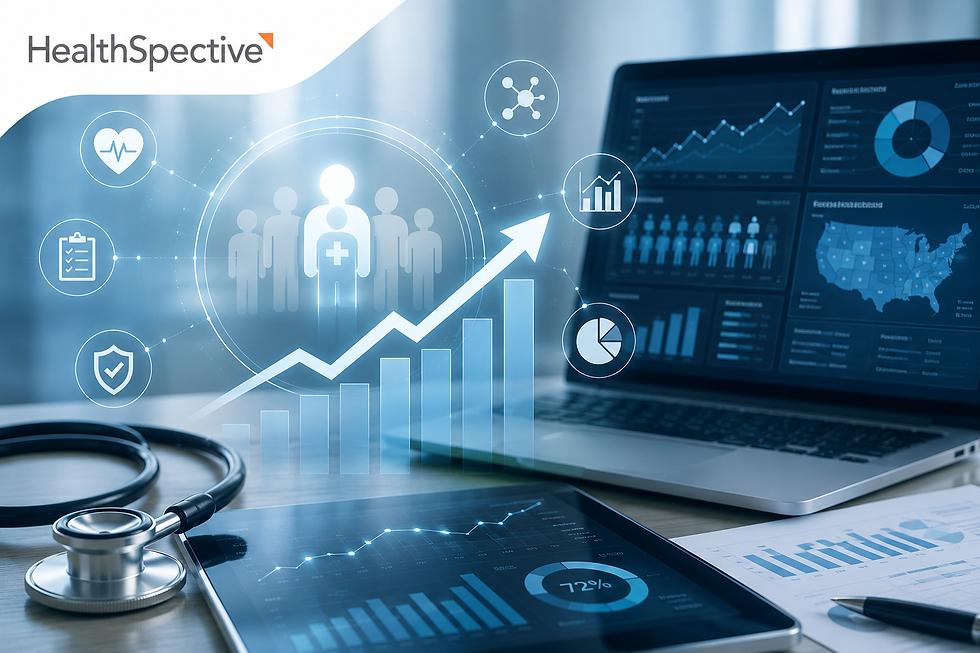
Predictive analytics changes this fundamentally. Rather than reporting the past, predictive models estimate what is likely to happen next which patients are at risk of a care gap going unclosed, which HCC diagnoses are likely missing from risk adjustment submissions, which claims patterns are likely to trigger an audit. That shift from reactive to proactive is one of the most significant changes in how high-performing healthcare organizations manage quality and compliance in 2026.
McKinsey estimates predictive analytics and AI could generate $200 to $360 billion annually across the US healthcare system through clinical, operational, and administrative improvements. By 2024, 71% of US hospitals reported using predictive AI built into their electronic health records up from 66% the year prior, according to federal analysis of American Hospital Association survey data. And the healthcare predictive analytics market continues to be one of the fastest-growing segments within healthcare technology.
At HealthSpective, our work in HEDIS quality measurement, risk adjustment coding integrity, and audit readiness and compliance monitoring is directly informed by how predictive analytics is reshaping what healthcare organizations can accomplish with the data they already have. This blog explains what predictive analytics means in practice for healthcare quality and where it delivers the most measurable results.
What Predictive Analytics Means in Healthcare Quality
Predictive analytics uses statistical models, machine learning algorithms, and data mining techniques to forecast future outcomes based on historical and current data. In healthcare, this means analyzing clinical records, claims data, pharmacy information, social determinants of health, and operational data to produce actionable predictions not just reports.
The key distinction that matters for quality programs is the difference between three types of analytics:
Analytics Type | What It Does | Healthcare Example |
Descriptive | Reports what happened | "Our diabetes HbA1c measure rate was 68% last year" |
Predictive | Estimates what is likely to happen | "These 847 members are likely to have an open HbA1c gap by September" |
Prescriptive | Recommends what to do | "Schedule outreach to these 847 members in July for maximum closure probability" |
Most healthcare organizations start with descriptive reporting and grow into predictive and prescriptive use over time as data quality improves and clinical trust in model outputs develops. In 2026, the organizations achieving the strongest quality performance are predominantly operating in predictive and prescriptive mode using data not just to understand the past but to drive specific actions in the present.
Predictive Analytics in HEDIS Quality Measurement
HEDIS quality measure performance is one of the clearest applications of predictive analytics in healthcare quality. The challenge with HEDIS is timing: most of the effective window for closing care gaps closes around October 15, not December 31 because scheduling patients, completing services, and having data flow into quality calculations takes weeks. Organizations that identify open gaps in October are already too late for a significant portion of their population.
Predictive analytics solves this timing problem by:
Identifying high-risk members early. Models trained on prior-year claims data, engagement history, and demographics can identify, in January or February, which members are statistically most likely to have an open care gap at year-end. This allows quality teams to begin outreach months earlier when member scheduling, provider capacity, and data capture timelines are still favorable.
Prioritizing outreach on members most likely to respond. Not every member with an open gap will complete the needed service regardless of how many times they are contacted. Predictive models can identify which members are most likely to respond to outreach based on prior behavior allowing quality teams to concentrate limited resources on the highest-yield interventions rather than applying uniform outreach to every member on the gap list.
Predicting measure-level performance trajectories. Rather than waiting for quarterly data pulls to assess how a measure is tracking, predictive models can estimate current-year measure rates based on year-to-date data giving quality leaders early warning when a measure is trending below target with enough time to intervene.
AI-enabled analytics platforms in 2026 increasingly predict at-risk patients and care gaps before they occur, enabling earlier interventions. This capability connects directly to HEDIS quality measurement service programs that identify and act on gaps systematically rather than waiting for year-end reports.
Predictive Analytics in Risk Adjustment
Risk adjustment accuracy is another domain where predictive analytics delivers significant and measurable value. The financial stakes are substantial: a single missed HCC across a panel of thousands of Medicare Advantage members represents millions of dollars in foregone capitation revenue annually.
Annual recapture gap identification. Predictive models analyze prior-year claims to identify members whose chronic conditions were coded in the prior year but have not yet been recaptured in the current year. These "likely missing" HCCs can be surfaced as a prioritized list for prospective coding programs allowing providers to re-document active conditions during Annual Wellness Visits and scheduled encounters before the submission window closes.
HCC interaction factor surfacing. Under CMS-HCC V28, specific pairs of comorbid conditions generate additional interaction factor RAF value when documented together. Predictive models can identify members who have one condition in a high-value pair coded but not the second flagging these for clinical review to determine if the second condition is present but undocumented.
RADV audit exposure scoring. Before CMS RADV auditors select a sample, organizations can use predictive analytics to score their own submitted HCCs by audit risk identifying which codes are most likely to fail MEAT documentation validation. This allows pre-RADV remediation to focus on the highest-risk submissions rather than reviewing everything uniformly.
These capabilities connect directly to the risk adjustment coding integrity work that protects revenue and audit standing simultaneously.
Predictive Analytics in Audit Readiness and Compliance Monitoring
CMS, OIG, and PBM auditors in 2026 are themselves using predictive analytics and AI to flag claims for review before a human auditor ever looks at them. CMS is deploying real-time automated oversight systems that compare submitted data against the federal source of truth, flagging discrepancies immediately. OIG and DOJ are scaling machine learning tools that rapidly flag outlier billing, telehealth spikes, and risk adjustment irregularities increasing both the speed and scope of investigations.
Organizations that are not using analytics to monitor their own data are, in effect, waiting for external analytics to find their problems for them. That is a defensible position that is increasingly difficult to maintain.
The practical application of predictive analytics in compliance monitoring includes:
Claims pattern monitoring identifying statistical outliers in billing patterns before they trigger external audit flags
Documentation quality scoring estimating which submitted HCCs are most likely to fail MEAT validation before auditors request medical records
Compliance timeline forecasting predicting which corrective action plan deliverables are at risk of missing deadlines based on current workflow data
Delegated entity performance prediction identifying which vendor data submissions are most likely to contain quality issues based on historical patterns
This is the philosophy behind continuous, proactive audit readiness and compliance monitoring using data to find and fix problems before they become audit findings, not after.
Predictive Analytics in Population Health and Care Management
Beyond HEDIS and risk adjustment, predictive analytics supports the broader population health management work that underpins quality improvement programs:
Readmission risk prediction. Predictive models can identify patients at high risk for hospital readmission before discharge, enabling targeted care coordination interventions. Predictive models have demonstrated reductions in readmissions of 15 to 25%, representing substantial clinical and financial value for health plans and provider organizations.
Chronic disease management. For high-priority chronic conditions diabetes, hypertension, heart failure, COPD predictive models can identify patients whose current clinical trajectory suggests risk of deterioration, medication non-adherence, or upcoming acute care utilization. This enables proactive outreach by care managers before a crisis occurs, rather than reactive case management afterward.
Social determinants of health integration. Predictive models that incorporate SDOH data housing instability, food insecurity, transportation barriers substantially improve the accuracy of care gap and utilization predictions. Members facing social barriers are disproportionately likely to have open quality gaps, and outreach strategies need to account for those barriers to be effective.
Turning Predictive Insights Into Quality Action
Predictive analytics only delivers value when its outputs are connected to workflows that produce real clinical and compliance actions. The most common failure mode organizations experience is building analytics capability without connecting it to operational decision-making resulting in dashboards that are interesting but do not change what happens in care teams, quality programs, or compliance monitoring.
The organizations that achieve the best quality outcomes with predictive analytics share a consistent approach:
Outputs are workflow-embedded. Predictive alerts and risk scores flow directly into the tools that care managers, coders, and quality coordinators use every day not into separate dashboards that require extra effort to access.
Interventions are tested and refined. Organizations treat predictive outreach programs as experiments, measuring which interventions actually close gaps and refining their targeting based on real-world response rates.
Data quality is managed upstream. Predictive models are only as reliable as the data they run on. Organizations that invest in upstream data quality accurate coding, complete documentation, reliable EHR data capture get more accurate predictions and more effective interventions.
Frequently Asked Questions
Q: What is predictive analytics in healthcare? A: Predictive analytics in healthcare uses statistical models and machine learning to analyze historical and current data including claims, clinical records, pharmacy data, and social determinants to forecast future outcomes such as care gaps, readmission risk, audit exposure, and quality measure performance.
Q: How does predictive analytics improve HEDIS performance? A: Predictive models identify members most likely to have open HEDIS care gaps months before year-end, prioritize outreach toward members most likely to complete needed services, and forecast measure-level performance trajectories early enough for meaningful intervention.
Q: How widely is predictive analytics used in healthcare in 2026? A: By 2024, 71% of US hospitals reported using predictive AI built into their EHR systems up from 66% the prior year. McKinsey estimates predictive analytics could generate $200 to $360 billion annually in value across the US healthcare system through clinical, operational, and administrative improvements.
Q: How does predictive analytics support risk adjustment programs? A: Predictive models identify likely missing HCC recaptures, surface high-value interaction factor opportunities, and score submitted codes for RADV audit exposure allowing organizations to act prospectively on revenue recovery and compliance risks rather than discovering them in audits.
Q: How can HealthSpective help our organization leverage healthcare data for quality improvement? A: HealthSpective's HEDIS quality measurement, risk adjustment coding integrity, and audit readiness and compliance monitoring services integrate data-driven approaches to quality and compliance improvement. Contact Info@HealthSpective.net or (713) 581-4320.
Q: What is the difference between descriptive and predictive analytics in healthcare? A: Descriptive analytics reports what has already happened last quarter's HEDIS rates, prior-year RAF scores. Predictive analytics estimates what is likely to happen next which members will have open gaps by year-end, which codes are likely to fail audit. Prescriptive analytics then recommends what specific action to take. High-performing organizations operate across all three levels.
Build a Data-Driven Quality Program With HealthSpective
Predictive analytics does not replace clinical judgment or compliance expertise it amplifies both by directing attention to the highest-priority opportunities and risks before they become problems. Organizations that build this capability into their quality and compliance programs consistently outperform those that rely on retrospective reporting.
HealthSpective's healthcare consulting team brings the quality, compliance, and data validation expertise to help organizations build programs that use data proactively from HEDIS performance improvement and risk adjustment accuracy to continuous audit readiness.


Comments